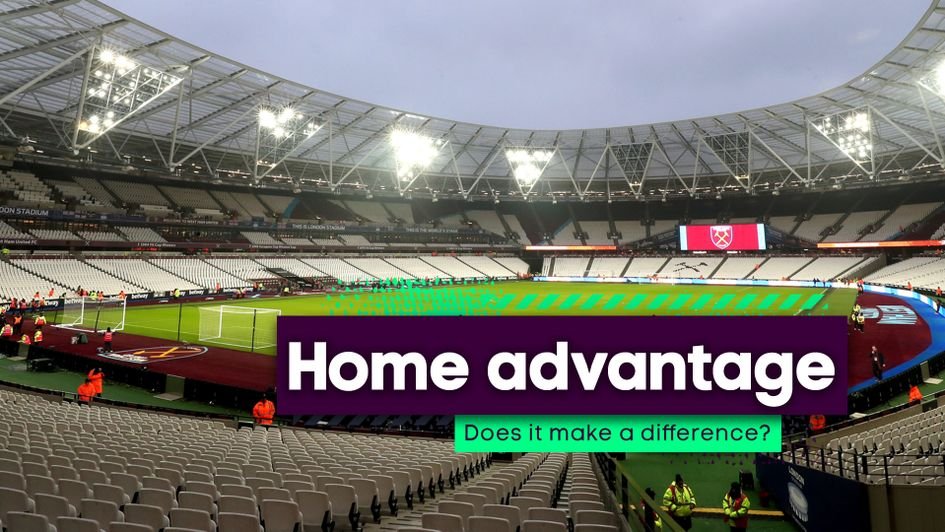
The idea of a “profitable” home advantage in the Bundesliga is not based on superstition or crowd noise alone. Certain home teams deliver consistent outcomes because structural, tactical, and situational factors align more reliably in their stadiums than elsewhere. This article explains how a repeatable home advantage formula emerges in the Bundesliga, why it works over time, and under what conditions it becomes unreliable. The focus is not on individual matches, but on patterns that remain stable across seasons.
Why Home Advantage in the Bundesliga Is Structurally Uneven
Home advantage in the Bundesliga does not apply equally to all teams. Some clubs benefit far more from playing at home because their tactical identity is closely linked to stadium dimensions, pitch quality, and crowd proximity. These environmental factors interact with playing style, amplifying strengths rather than compensating for weaknesses.
Teams that rely on vertical transitions, aggressive pressing, or wide overloads tend to perform better at home, where spatial familiarity reduces execution errors. In contrast, possession-heavy teams often show smaller home-away gaps because their approach is less sensitive to environmental variation. This uneven distribution explains why only certain home teams produce consistent outcomes rather than sporadic success.
Tactical Behaviors That Scale Better at Home
The most reliable home teams are those whose tactical behaviors scale upward under familiar conditions. Pressing intensity, defensive line coordination, and counterpressing efficiency often improve at home because communication is clearer and distances are instinctively understood.
Before breaking this down further, it is important to recognize that these advantages are cumulative rather than isolated. Repeated small gains across multiple phases of play produce measurable outcome differences.
Key tactical behaviors that benefit disproportionately from home conditions include:
- Higher pressing success due to coordinated triggers
- Faster recovery runs from wide players
- More accurate long switches and diagonals
- Increased shot volume from second balls
These behaviors do not guarantee wins, but they increase control, which stabilizes results over time.
Schedule Density and Travel Asymmetry Effects
Home advantage becomes more pronounced when schedule congestion and travel fatigue affect visiting teams. Bundesliga travel distances are moderate, but fixture timing and recovery windows still matter, especially for squads with limited rotation depth.
Midweek European fixtures or domestic cup matches often weaken away performance in subsequent league games. Home teams facing such opponents gain an indirect advantage unrelated to quality, but directly tied to physical freshness and preparation time.
A structural comparison clarifies this imbalance:
| Factor | Home Team | Visiting Team |
| Travel fatigue | Minimal | Accumulated |
| Tactical prep time | Stable | Reduced |
| Rotation necessity | Optional | Often required |
| Late-match stamina | Higher | Lower |
This asymmetry explains why certain home teams maintain consistency even without superior squads.
Psychological Familiarity and Decision Stability
Psychological familiarity reduces cognitive load during matches. Home players make faster decisions because visual cues, crowd reactions, and spatial references are predictable. This stability lowers error rates, particularly in defensive transitions and build-up under pressure.
Away teams, by contrast, often show hesitation when protecting leads or managing tempo late in matches. These small decision delays compound under sustained pressure, increasing the probability of conceding or losing territorial control.
Conditional Impact of Crowd Pressure on Refereeing Tendencies
Crowd proximity and intensity can influence refereeing behavior in marginal situations. While referees aim for neutrality, decision patterns show subtle shifts in foul frequency and added time allocation when home pressure is sustained.
This effect does not guarantee favorable decisions, but it contributes to cumulative advantage when combined with territorial dominance. Importantly, teams that already generate pressure benefit more from this condition than passive teams.
Match Profiles That Support Consistent Home Outcomes
Not all matches are equally suitable for exploiting home advantage. Certain match profiles align better with home-driven consistency, especially when the home team’s strengths match the opponent’s weaknesses.
These profiles tend to include the following sequence:
- Early territorial control without excessive risk
- Gradual increase in pressing intensity after halftime
- Sustained pressure phases rather than early goal chasing
- Late-game management focused on zones, not possession
After these conditions are met, home teams often secure results without dramatic scorelines, which reinforces consistency rather than volatility.
Risks and Failure Scenarios of Home-Based Formulas
A home advantage formula is not immune to failure. Overconfidence, rigid tactics, or misreading opponent intent can neutralize familiar advantages. Teams that assume automatic dominance at home often struggle against low-block opponents prepared to absorb pressure.
Injury concentration also poses a risk. If key press initiators or defensive organizers are unavailable, home-specific strengths lose coherence. Additionally, teams with declining fitness profiles may fail to sustain late pressure, undermining one of the main pillars of home consistency.
Interpreting Home Advantage Patterns in Analytical Contexts
When evaluating Bundesliga home performance in analytical environments such as ufabet168, consistency matters more than peak results. A home team that regularly controls match state, even without high-scoring wins, demonstrates structural reliability. This reliability emerges from repeatable behaviors rather than opponent-specific anomalies. By focusing on home-based tactical identity, schedule context, and decision stability, analysts can distinguish sustainable home advantage patterns from short-term variance. This approach avoids overvaluing recent scorelines and instead emphasizes structural signals that persist across different opponents and match conditions.
Summary
A consistent home advantage formula in the Bundesliga emerges when tactical identity, environmental familiarity, schedule asymmetry, and psychological stability align. Only certain teams benefit reliably because their playing styles scale under home conditions rather than merely improving marginally. These teams control matches through sustained pressure, decision clarity, and late-game management rather than emotional momentum. While risks remain, the consistency of outcomes reflects structure, not chance, making home advantage a repeatable pattern rather than a situational coincidence.