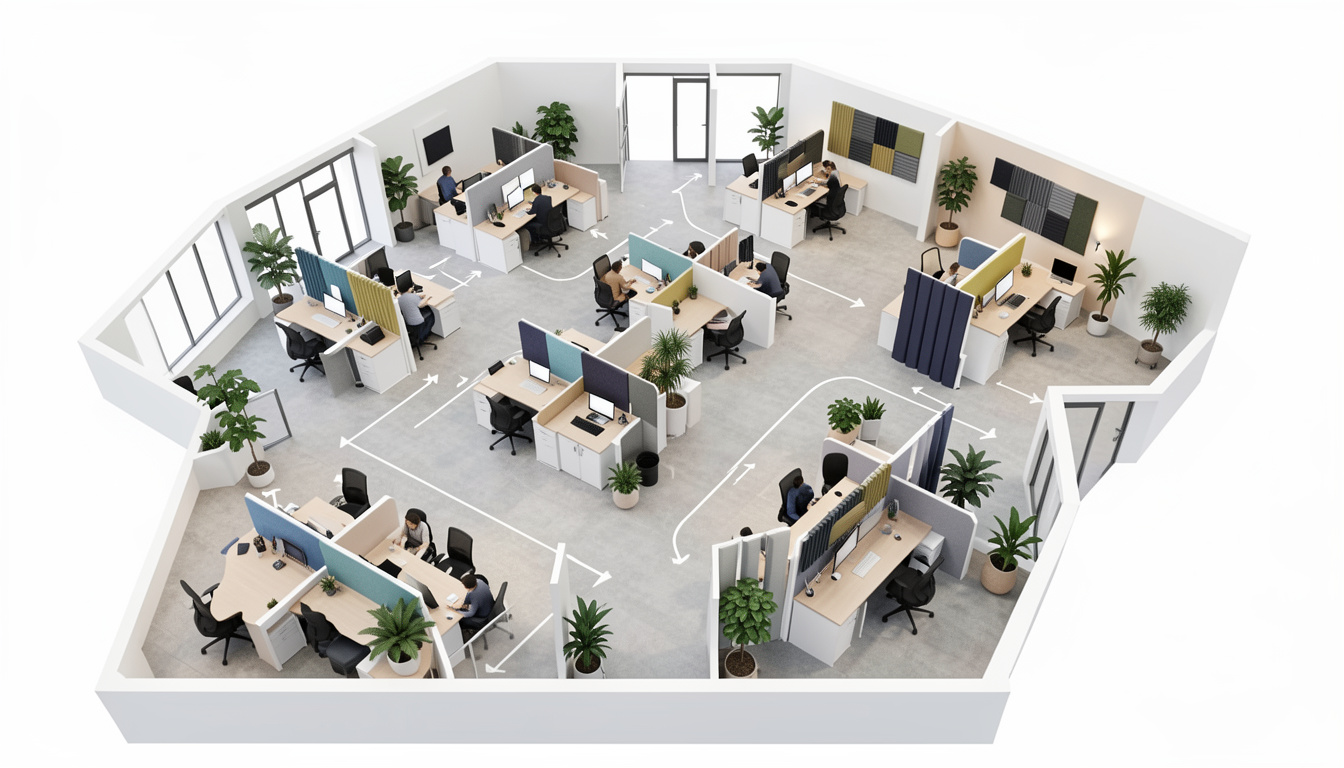
Coworking spaces are more than desks and WiFi; they are designed environments that nudge behavior throughout the day. Layout decisions influence how quickly people settle into focus, how often they get interrupted, and whether collaboration feels natural or forced. A layout can reduce friction by making quiet work easy, meetings easy to schedule, and short breaks restorative rather than distracting. It can also create invisible stress when noise travels, foot traffic cuts through work zones, or seating choices encourage constant social scanning. Productivity in coworking is rarely about a single feature. It is about how zones, pathways, lighting, and acoustics combine to support different tasks throughout the day, from deep work to calls to quick problem-solving.
What Layout Changes Most
- Zoning For Focus And Collaboration
The most productive coworking layouts separate activities by intent. Deep work zones support concentration with lower noise, fewer visual distractions, and predictable movement patterns. Collaboration zones encourage conversation and quick teamwork without making everyone else pay the price. When zoning is unclear, the entire space becomes a compromise, too noisy for focus and too awkward for real collaboration. Effective layouts place phone booths, meeting rooms, and social seating near each other so call-heavy work stays contained. Quiet desks are usually placed away from the main entry, coffee bar, and printer areas because those areas create frequent micro-interruptions. Some spaces also use semi-enclosed nooks or library-style desk areas to signal quieter norms without needing strict rules. Even small design elements, such as shelving, planters, and partial walls, can create a sense of separation that helps people stay on task. When users can choose a zone that matches their needs right now, they waste less time fighting the environment and spend more time producing real output.
- Circulation Paths And Distraction Load
How people move through a coworking space affects attention more than many realize. If the main walkway runs directly behind desks, workers experience constant peripheral motion that distracts them from complex tasks. If the coffee station or snacks are located deep inside the workspace, foot traffic becomes continuous, and casual chats begin near focused workers. Better layouts create clear circulation routes along the perimeter or through dedicated corridors so movement is predictable and less disruptive. The placement of shared resources matters too. Printers, mail shelves, and supply cabinets should be accessible but not positioned to create a standing crowd near workstations. Signage and visual cues also shape circulation. When people can see where to go without wandering, the space stays calmer. In marketing language, you might see a prompt like view our site in a coworking context. Still, inside the space, the productivity equivalent is making navigation obvious so members do not interrupt others to ask where rooms, restrooms, or quiet zones are located. Clear pathways reduce noise spikes and keep the environment from feeling chaotic.
- Acoustics, Materials, And Sound Behavior
Noise is one of the biggest determinants of coworking productivity, and layout is the foundation of acoustic control. Sound travels differently depending on ceiling height, hard surfaces, and whether spaces are open or segmented. Large open rooms with exposed ceilings and hard floors can amplify voices and keyboard noise, making even normal conversation feel intrusive. Layout helps by placing louder zones near sound-absorbing materials and by using buffers between quiet desks and communal areas. Phone booths and meeting rooms act as sound anchors, but only if they are placed where callers naturally choose to use them. If booths are too far away, people take calls at their desks, increasing disruption. Materials matter as well. Rugs, acoustic panels, upholstered furniture, and bookshelves reduce reflected sound, making the space feel calmer. Even the shape of the space influences sound. Long, narrow rooms can funnel noise, while broken-up layouts with corners and partitions scatter it. When acoustics are managed, people can work longer without fatigue, and they do not feel pressured to wear headphones all day.
- Lighting And Visual Comfort For Sustained Focus
Layout influences how light hits the workspace, and light affects energy, mood, and task endurance. Natural light is helpful, but glare can reduce productivity if desks face windows without proper shading. Good layouts position screens perpendicular to windows and distribute seating so premium light does not cluster in a single zone that becomes overcrowded. Task lighting at desks supports detailed work, while softer lighting in lounge zones encourages short breaks that actually refresh the brain. Visual comfort also includes what people see. Desks facing a busy corridor or a loud lounge can create constant visual stimulation. Some coworking spaces position desks to face walls or calm views, reducing distraction. Others use partial partitions that preserve openness while limiting sightlines, helping people stay in a focused mental state. Layout also affects crowding. When desks are too tight, people feel watched and become more self-conscious, which can reduce creative risk-taking and concentration. When spacing is appropriate, workers settle in faster and maintain momentum through the day.
Layout Turns Time Into Output
Coworking layouts influence daily productivity by shaping focus, interruption rates, comfort, and how easily people shift between work modes. Clear zoning separates quiet work from collaboration, while smart circulation routes reduce distraction from constant foot traffic. Acoustic planning and material choices keep noise from spreading, and thoughtful lighting placement supports sustained focus without glare or fatigue. When a coworking space offers varied zones suited to different tasks, members can choose where to work based on what they need in the moment rather than fighting the environment. Over a full day, these layout choices compound into steadier attention, better energy management, and more meaningful output.