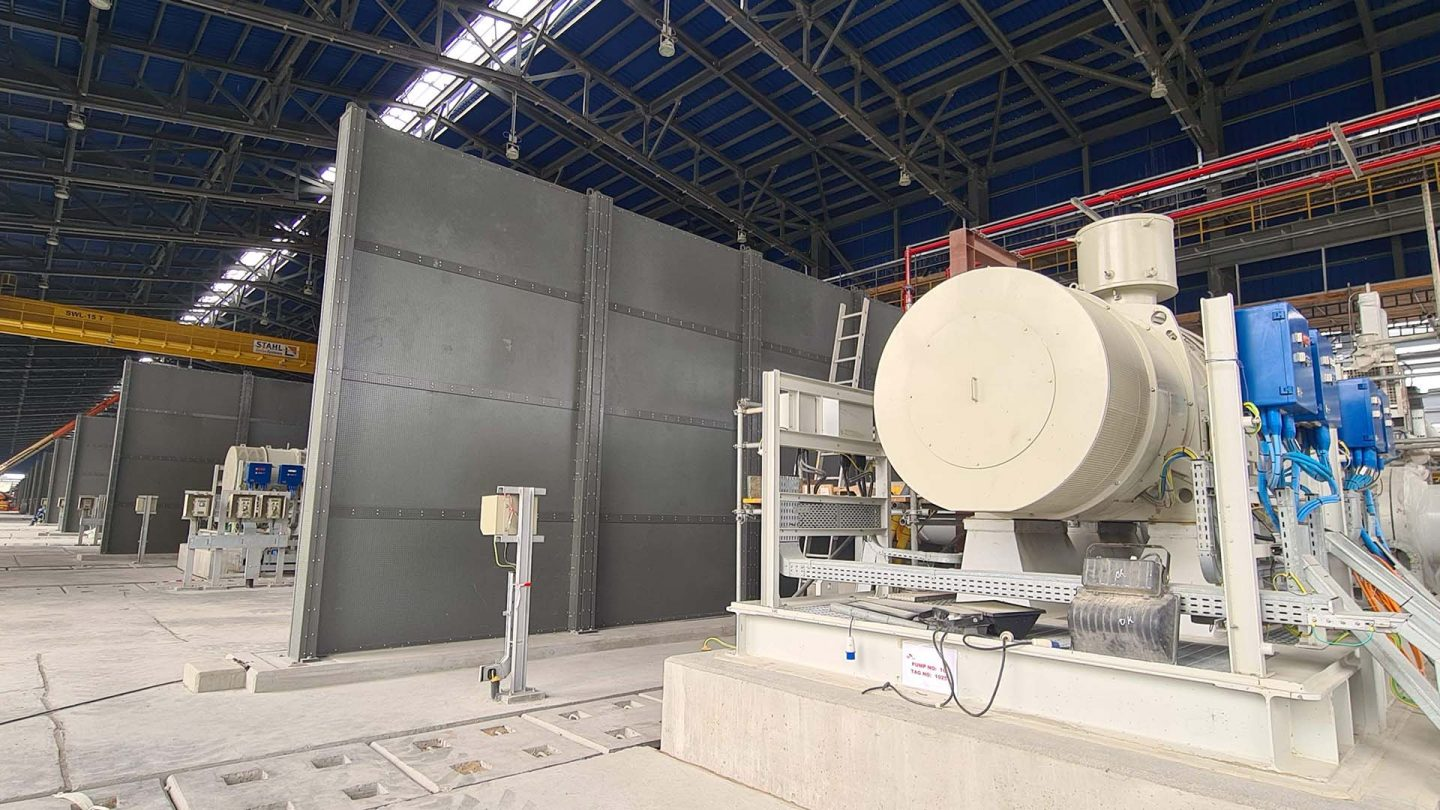
Older city substations were often built when setbacks were generous, surrounding land uses were lighter, and public expectations about risk were lower. Today, those same sites sit next to apartments, offices, schools, and transit corridors, with more electrical load packed into the same footprint. Retrofitting blast-resistant fire walls is one of the most direct ways utilities reduce the consequences of transformer failures, arc events, or fuel-fed fires when relocation or full rebuild is not realistic. The challenge is that an urban substation retrofit must fit within tight clearances, keep equipment energized as much as possible, meet fire and structural requirements, and avoid creating new maintenance or ventilation problems.
How retrofit walls are designed and validated
- What Blast Resistance Actually Means On Site
A blast-resistant wall is not simply a thicker masonry barrier. It is a structural system designed to resist impulsive loads from pressure waves and flying debris, while also maintaining integrity under high heat exposure. In substation contexts, the initiating event may be an internal transformer fault, a bushing failure, an arc flash, or a rapid release of vaporizing oil that creates a pressure front. A retrofit wall must be able to absorb and redistribute that energy without collapsing into equipment or public space. The wall also needs to manage fragmentation risk, because shrapnel and projectiles can travel farther than many people assume in dense urban corridors. Utilities typically define performance goals through hazard assessments that consider equipment rating, oil volume, proximity to occupied structures, and criticality of service. Designers then align wall geometry and reinforcement to those goals while keeping access pathways intact. This is why material selection alone is not enough. Geometry, anchorage, foundations, and connections often determine whether the wall performs as intended.
- Fire Separation, Heat Flux, and Oil Fire Behavior
Fire walls in substations are often tasked with a difficult combination: block direct flame impingement, reduce radiant heat transfer, and survive thermal shock, all while remaining stable in the event of a blast. In retrofits, space constraints can force walls to be close to transformers, increasing heat flux and raising the stakes for fire rating and surface durability. Oil fires can burn intensely and cause prolonged heat exposure, so the wall assembly must account for spalling, cracking, and loss of strength at elevated temperatures. Openings for cable trays, conduit penetrations, and grounding conductors must be detailed to prevent them from becoming flame paths. Coordination with suppression systems also matters. Deluge water, foam, or mist can change thermal conditions and may impose additional loads on wall surfaces. Many retrofit projects now integrate Transformer Fire Barriers as part of a broader strategy that includes separation, drainage, and containment, because a wall performs better when the fire is managed at the source, and oil is prevented from spreading. The practical goal is to keep a single equipment failure from cascading into multiple assets or adjacent properties.
- Retrofit Geometry That Works With Existing Layouts
Urban retrofits rarely offer clean slate geometry. Walls must fit around bus structures, cable trenches, control houses, and existing foundations. A common approach is to create segmented barriers that protect specific assets while preserving line of sight for operations and maintaining required electrical clearances. Height decisions are particularly sensitive. Taller walls improve shielding from radiant heat and debris, but they can interfere with overhead conductors, maintenance lifting paths, and ventilation. They can also create wind loading and overturning moments that demand stronger foundations, which may be difficult to install near live equipment. Wall length and end returns matter too. A wall that stops short of the hazard can allow heat and debris to wrap around the ends, reducing effectiveness. Designers often use returns, wing walls, or angled sections to manage that wraparound effect. Drainage and grading must also be considered, because a wall can unintentionally trap oil or water and create pooling that can increase fire duration or cause environmental release. A good retrofit solves these interactions rather than treating the wall as an isolated object.
- Materials, Reinforcement, and Connection Detailing
Blast-resistant fire walls rely on robust materials, but the performance is often governed by reinforcement and connections. Reinforced concrete is common because it handles both fire exposure and impulsive loads when properly detailed. Precast panels can work if connections are engineered to resist dynamic loads without brittle failure. In some contexts, composite systems combine concrete with steel plates or energy-absorbing layers to manage the impact of fragments. The foundation connection is critical. A wall that is strong in bending can still fail if its base slides, rotates, or punches through inadequate footings. Retrofit foundations may require micro-piles, grade beams, or enlarged footings to distribute loads without extensive excavation. Anchorage into existing slabs or foundations must be verified for capacity and condition, which can be challenging in older substations with unknown reinforcement and decades of modifications. Penetrations and embedded items need careful detailing to avoid creating stress risers or heat pathways. The result should be a wall that behaves predictably under load and remains maintainable for the life of the substation.
Focused on Retrofit Reality
Blast-resistant fire walls in urban substation retrofits are a response to modern density and modern expectations. They combine structural resistance to impulsive loads with fire-separation performance that limits heat transfer and asset-to-asset heat transfer. The retrofit challenge lies in fitting the solution into constrained sites while maintaining electrical clearances, access, drainage, and ongoing operations. When designed with hazard goals, detailed with strong foundations and connections, and maintained through disciplined inspection, these walls reduce the consequences of rare but high-impact events. In dense urban environments, that consequence reduction is often the difference between a contained equipment loss and a neighborhood-scale disruption.