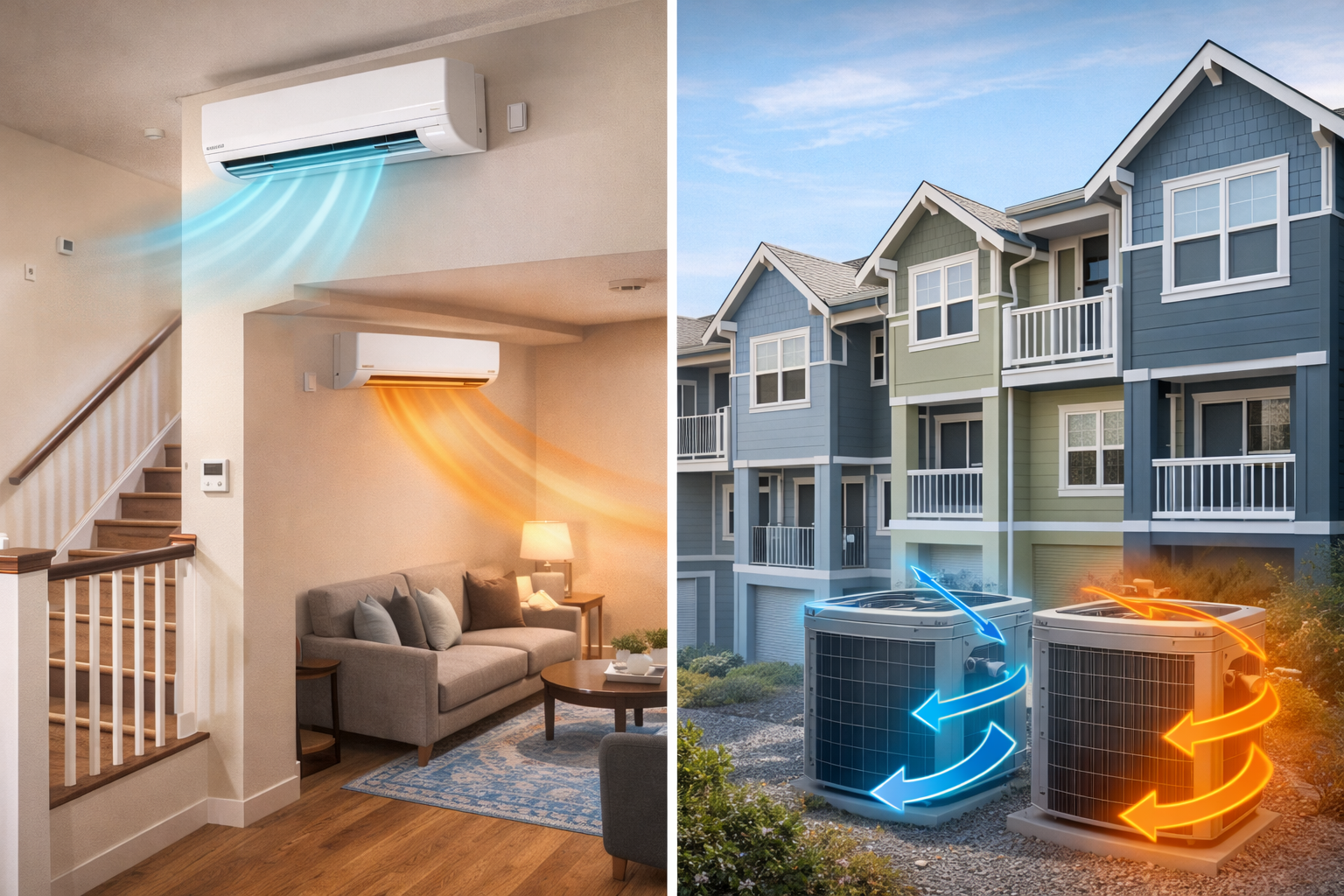
Multi-story homes rarely heat and cool evenly. Warm air drifts upward, sun exposure changes by room, and long duct runs can leave far bedrooms lagging behind. HVAC zoning addresses those realities by dividing a house into comfort areas that can be controlled independently, rather than forcing every level to follow one thermostat. With zoning, the upstairs can call for cooling while the main floor coasts, or a finished basement can stay steady without over-conditioning the rest of the structure. The result is steadier temperatures and a system that follows daily use. That flexibility matters; weather swings in spring and fall.
What the next sections deliver
- How Zoning Coordinates Thermostats and Dampers
A zoning setup pairs multiple thermostats with motorized dampers installed in the supply ducts. Each thermostat monitors its own area and reports to a zone control board, which decides which dampers should open and whether the equipment should run. When only the upstairs needs cooling, those dampers open while others stay mostly closed, guiding air where it is requested instead of flooding the entire home. Thermostats should sit away from stairwells, exterior doors, and direct sunlight to avoid false calls. Many households value zoning because it supports different schedules—quiet bedrooms at night, active living areas by day—without constant changes. If you convert a room into a Tarzana office a dedicated zone can keep it comfortable without pulling the whole house along. Remote sensors can also average readings across a floor. The board can coordinate fan speed and output, keeping airflow steady when only one level is calling.
- Choosing Zones That Reflect Real Heat Gain and Use
Good zoning design starts with patterns: which rooms get sun, which level has the tallest ceilings, and where doors stay closed. In many homes, two zones—upstairs and downstairs—solve the imbalance, but some layouts benefit from a third zone when a bonus room, basement, or addition behaves differently. The goal is to group rooms with similar exposure and occupancy so the system can run in longer, steadier cycles. Zones that are too small can reach the set point fast, then shut off, creating swings and weaker moisture control. Duct sizing and return-air paths matter, since a zone needs a reliable way to move air back to the equipment. Transfer grilles or jump ducts can help keep pressure balanced behind closed doors. A load check guides damper sizing. Avoid pairing a sunny loft with shaded bedrooms in the same zone, or one area will always dictate comfort for the other.
- Managing Airflow, Static Pressure, and Equipment Protection
Because zoning opens and closes dampers, it can change static pressure inside the duct system. If several dampers shut at once, the blower may try to push the same volume through fewer pathways, raising noise and strain. Variable-speed blowers help by ramping down when fewer zones call, and staged heating or cooling can run at lower output for single-zone demands. Some homes use a bypass damper that routes excess supply air back to the return side, but it must be set carefully so it does not undermine dehumidification. Filters, coils, and grilles matter more with zoning because restrictions are amplified when airflow concentrates into one open zone. Commissioning should include pressure checks, damper verification, and airflow measurements at key registers. Added return capacity can solve persistent pressure issues. If pressure is high, redesigning a tight duct run works better than forcing fan speed higher. Comfort depends on those details, too.
- Keeping Performance High Over Time
Zoning often pays off in everyday comfort and, over time, in energy use, particularly when one floor is over-conditioned to satisfy another. The practical gains come from smarter set points: cooling bedrooms at night, easing back during the workday, and letting rarely used spaces drift a bit. Maintenance keeps performance consistent. Thermostat settings should be reviewed before peak seasons, dampers should be exercised during service visits, and the control board should match the equipment’s staging and fan profiles. If the home adds insulation, replaces windows, or finishes an attic, zones may need rebalancing because heat gain and loss shift. Watch for frequent short cycling or long runtimes in one zone; both can point to an airflow mismatch. Even furniture changes matter when a thermostat gets blocked by a curtain or bookcase, skewing calls. A seasonal check of delivered airflow and temperature split can restore balance without major upgrades later on.
A Steadier Home From Basement to Bonus Room
HVAC zoning is a practical way to make multi-story living feel even, not like a tug-of-war between floors. By combining multiple thermostats, a control board, and properly sized dampers, the system delivers conditioning where it is needed and rests where it is not. The real win comes from design and setup: grouping rooms with similar loads, protecting airflow with variable-speed control or careful bypass strategy, and confirming pressure and delivery during commissioning. With periodic maintenance and the willingness to rebalance after home upgrades, zoning can stay reliable season after season. It also reduces arguments by giving each level a say.